Bulbul: Making the Radio Sing Again
Bulbul: Making the Radio Sing Again
Bulbul: Making the Radio Sing Again
In an age of streaming platforms, endless playlists, and on-demand entertainment, radio can feel like a relic of the past. Yet for much of the twentieth century, radio was one of the most influential cultural forces in Iraq. It introduced audiences to music, poetry, news, comedy, and conversation, becoming a companion that accompanied daily life across generations.
Despite Iraq having one of the oldest radio stations in the Middle East (second only to Cairo) and some of the region’s longest-running radio programs, many young Iraqis today know very little about the voices, artists, and broadcasters who shaped this rich history.
This was the starting point for Bulbul, the fifth issue of Iraqi Zine.
The workshop takes its name from the famous mechanical copper bird known as the Bulbul. Every morning at 6 a.m., from 1976 until 2003, its chirping signaled the beginning of Iraqi radio broadcasts. For generations, the sound became part of everyday life. A small but familiar ritual shared across the country.
Through this workshop, we wanted the Bulbul to sing again.
Section One: Voices of Critique
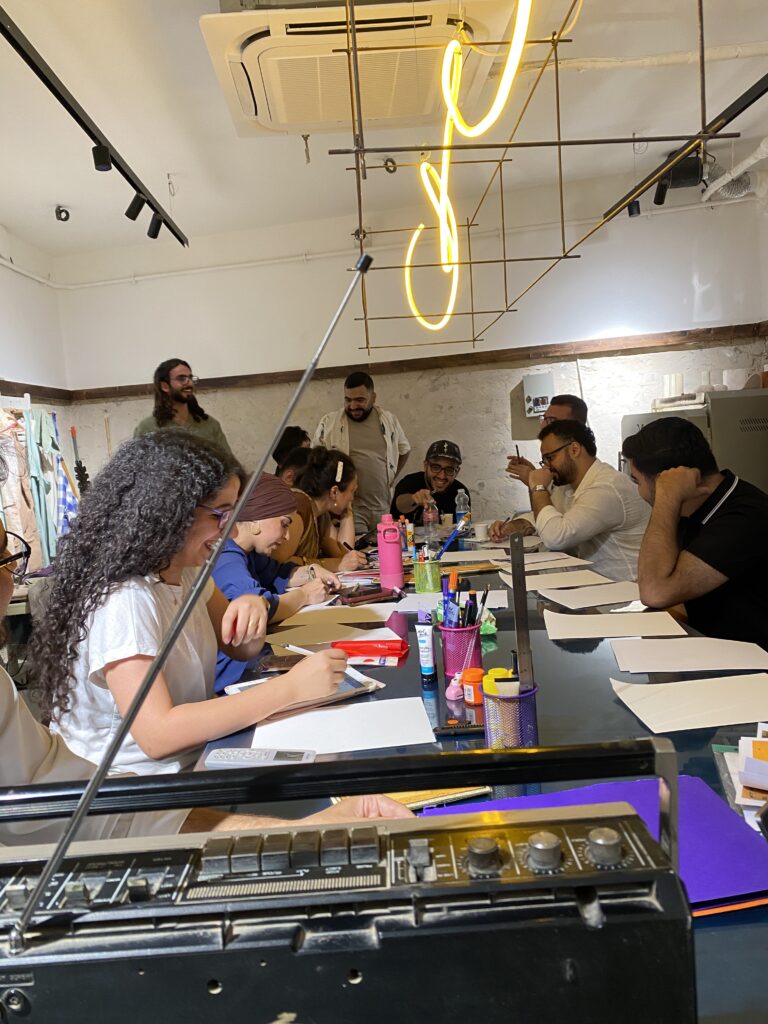
We began our workshop by exploring the history of Iraqi radio, tracing its development from its establishment in 1936 and discussing its role in shaping culture, entertainment, and public discourse.
Participants were then introduced to Aziz Ali, the legendary Iraqi monologue artist known for his satirical songs that critiqued politics, social issues, and government policies with wit and humor.
Inspired by his work, participants reflected on the issues affecting their own lives today. Traffic, electricity shortages, extreme heatwaves, weak infrastructure, and other everyday challenges became the subjects of original monologues written during the workshop.
Section Two: Drawing the Sound
Participants then learned about some of the singers whose voices once filled Iraqi airwaves and listened to a selection of songs from different periods of Iraqi radio history. Rather than discussing the music analytically, participants were asked to engage with it visually.
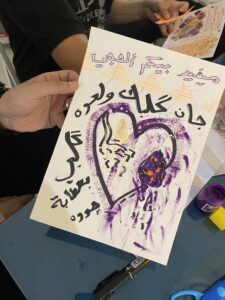
Each participant received printed lyrics from a radio-era song and was challenged to translate those words into an artwork.
Some focused on narrative scenes suggested by the lyrics, while others responded to mood, symbolism, or emotion. The byproduct was a collection of illustrations that demonstrated how music can generate images, memories, and personal interpretations beyond sound itself.
Section Three: Radio on Paper
For the third section, we collaborated with the Iraqi Print Archive, a youth-led initiative dedicated to preserving and promoting Iraq’s print culture.
Participants were handed out prints of historical posters, advertisements, magazines, and materials connected to Iraqi radio and broadcasting. These archives offered a glimpse into the visual world that surrounded radio culture for decades.
By working directly with historical print culture, participants explored the relationship between broadcasting, graphic design, and public communication, discovering how radio existed not only as sound, but also as a storytelling tool.
Section Four: Becoming the Broadcaster
After listening to archival excerpts from a wide range of radio programs; including children’s broadcasts, poetry readings, language-learning segments such as Qul Wala Taqul, social advice programs, and psychological discussions, we reflected on the diversity of content that once accompanied Iraqis throughout their day.
Participants then imagined the radio program they would create today.
Each participant developed a show title, selected a broadcast time, and defined their target audience. Using collage and printed archival materials, they designed promotional posters for their imagined programs.
The results varied from playful concepts to deeply personal and socially engaged broadcasts. Together they revealed the concerns, interests, and aspirations of a new generation while remaining rooted in the legacy of Iraqi Radio.
Making the Bulbul Sing Again
By the end of the workshop, many participants expressed surprise at the depth and diversity of Iraq’s radio heritage. For most, this was their first encounter with the stories, voices, and cultural figures that shaped Iraqi broadcasting throughout the twentieth century.
They left not only with their zines, but with a renewed curiosity about a medium that once connected millions of people across the country.
For a few hours, radio was no longer something distant or forgotten. It became a space for creativity, reflection, critique, and imagination.
And for a brief moment, the Bulbul sang once again.