Firnas: Reimagining Movement, Identity, and the Right to Explore
Firnas: Reimagining Movement, Identity, and the Right to Explore
In late 2025 and early 2026, Iraq experienced repeated airport closures due to escalating regional conflict. Something as simple as movement, often taken for granted elsewhere, suddenly became uncertain or inaccessible.
This disruption exists alongside long-standing restrictions. The Iraqi passport remains one of the lowest-ranked in the world, limiting access across borders. Economic challenges make travel unattainable for many, while social constraints, especially for women, add another layer of restriction.
For many Iraqi youth, travel is not just a plan, it is a constant negotiation with systems, identity, and circumstance.
From this reality, Firnas was born.
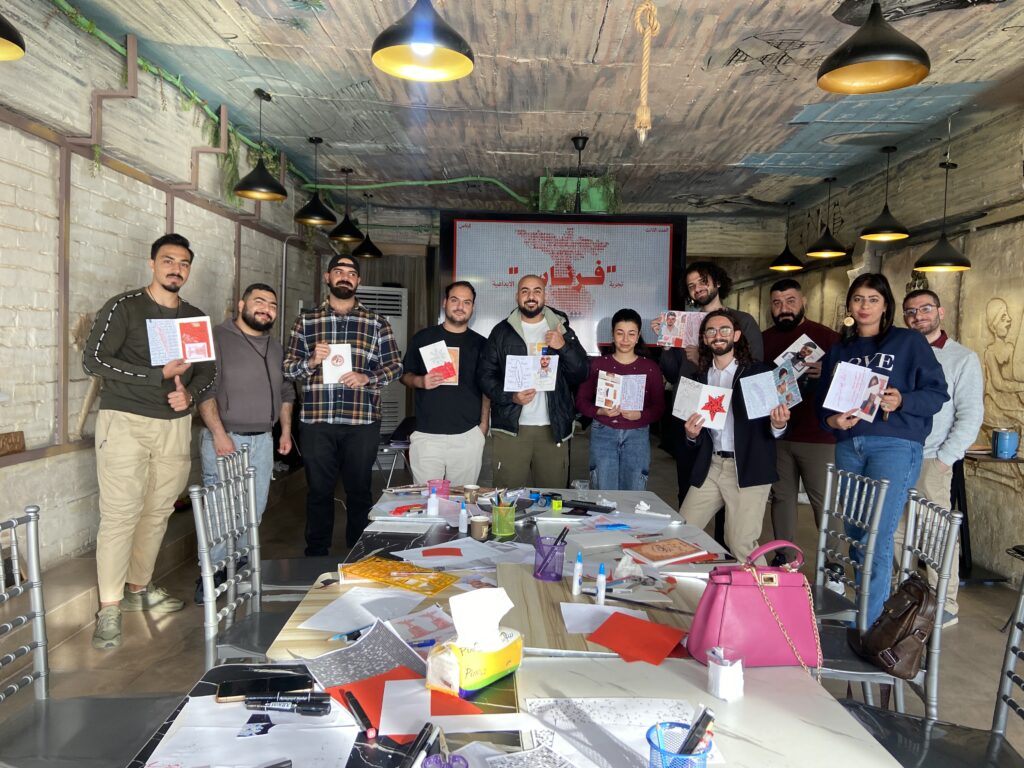
We designed this session as a space for Iraqi youth to reflect on restricted mobility and share their experiences, whether through visa rejections, bureaucracy, or the simple desire to explore the world. At its core, Firnas explored something fundamental: the right to move.
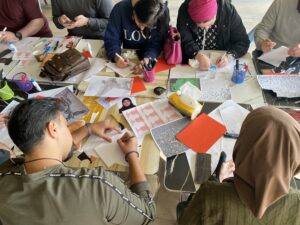
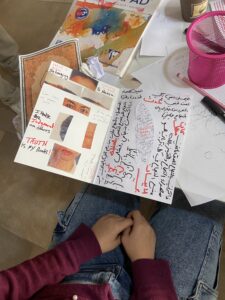
The workshop was divided into four sections, each contributing to one page of a personal zine created by every participant.
Section One: Where Would You Like to Be Born?
We opened with a simple but revealing question:
If you weren’t born in Iraq, where would you choose to be born?
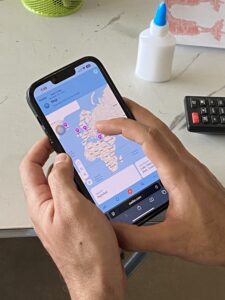
Participants placed pins on a world map, marking the countries they would choose. Many selected destinations associated with greater access, opportunity, and mobility.
One response, however, shifted the conversation. A participant who was Iraqi but born in Syria chose Iraq. For him, being born outside Iraq meant years of bureaucratic complications and identity-related barriers. His answer challenged assumptions and opened a deeper discussion on how birthplace shapes not only opportunity, but belonging itself.
Participants then searched for the passports of their chosen countries and used them as inspiration to redesign their own passport covers. Through drawing, writing, and collage, the passport transformed from a rigid state-issued document into a personal space for reimagining identity.
Section Two: Liberating the Image
The second section focused on something deeply familiar: the official photo.
Participants reflected on the strict rules imposed on these images and how they dictate the way a person must appear in order to be recognized, documented, and approved.
This became a conversation about larger systems of control. Mobility often feels conditional, requiring people to constantly prove themselves through paperwork, financial readiness, and other invisible expectations.
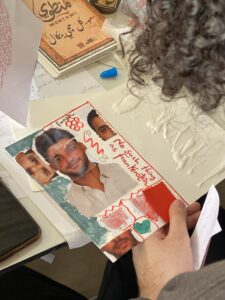
Participants were then invited to transform the official photos they had brought with them. Through cutting, layering, and collage, compliant images were dismantled and reshaped into something more expressive and alive.
What emerged were fragmented portraits, hybrid identities, and playful compositions that no longer asked for approval.
Section Three: The Weight of Failure
In the third section, we turned to the story of Abbas Ibn Firnas: scientist, inventor, poet, and pioneer.
Despite his many contributions, he is most often remembered for one thing: his failed attempt to fly.
We asked the participants:
Why do we remember the fall, but forget everything that made the attempt possible?
Each participant received two feathers. On one, they wrote about a personal failure. On the other, a moment of success.
They were then asked to choose one feather for their zine page. Surprisingly, many participants refused to choose. Instead, they combined both feathers, merging failure and success into one.
Their reasoning was simple: success cannot exist without failure.
This reframed Ibn Firnas’ story. His fall was no longer just failure, but part of a larger narrative about curiosity, risk, and the courage to attempt.
Section Four: The Final Mark
For the final page, participants created a stamp, message, or symbol they wanted to leave behind.
Using ink, shapes, and textures, they designed repeatable marks. Each impression reinforces a personal statement.
One participant wrote: “May love be with you.”
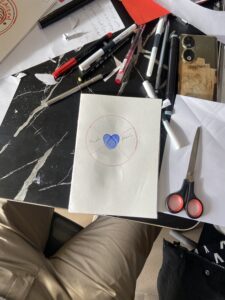
A small but intentional shift from the familiar phrase “May peace be with you.” When asked why, he explained that peace alone is not enough, it needs a deeper foundation. For him, that foundation was love.
The final page moved the zine from reflection into declaration.
If earlier sections explored restriction, identity, and transformation, this last page answered a final question:
What do you choose to leave behind?
\
Follow us on Instagram → https://instagram.com/iraqizine
Browse the zines → https://iraqizine.com/zines